For Vets:

Is My Cat Depressed? What are the Signs & How to Help
Is My Cat Depressed? What are the Signs & How to Help
May 27, 2025

Is My Cat Depressed? What are the Signs & How to Help
May 27, 2025
Is My Cat Depressed? What are the Signs & How to Help
May 27, 2025
Is your cat feeling blue lately? Like humans, cats can also experience mental stress that presents with behavioural changes in their daily routine. Looking out for tell-tale signs allows you to address potential depression and improve the well-being of your feline friend.
This article provides some useful information on feline depression and how to manage the condition.
How to Tell If My Cat is Depressed?

Cats cannot express their emotions verbally, but instead communicate distress through noticeable changes in their body language.
Common Signs of Depression in Felines:
- Reduced appetite or changes in eating patterns.
- Losing interest in interaction or favourite activities.
- Excessive sleeping or lethargy.
- Grooming changes leading to unkempt fur.
- Withdrawal from family members or other animal companions.
- Changes to litter box habits.
If your cat is not behaving like its normal self, consult a vet immediately, as some of these clinical signs may be associated with underlying health issues.
Do Cats Get Depressed?
Yes, even cats can experience depression. The condition usually improves with proper care and environmental adjustments. However, cats are masters at hiding physical illnesses, so a veterinary examination is essential to rule out potential medical issues.
Causes of Cat Depression

Various factors, from environmental triggers to health problems, can leave your cat depressed. Identifying the root causes is an important step in managing your cat's health.
Common Causes of Depression in Cats
- Grief: Most cat owners tend to believe that cats are independent creatures. However, cats are capable of forming strong bonds with family members or other pets. Losing a social companion can result in mourning.
- Environmental Changes: Moving houses can be stressful for cats, as the sudden change might restrict their usual activity patterns. For instance, relocating to an apartment might prevent an outdoor cat from accessing familiar outside spaces.
- Routine Disruptions: Changes to your working schedules, caretakers, or daily household patterns can upset a cat's routine.
- Physical Illness: Health problems such as arthritis or injuries can limit your cat's mobility and restrict normal activities. Underlying medical conditions are also often present with behavioural changes before physical symptoms become apparent.
Understanding the potential triggers for depression allows you to take preventive measures and improve the well-being of your cat.
Caring for a Depressed Cat
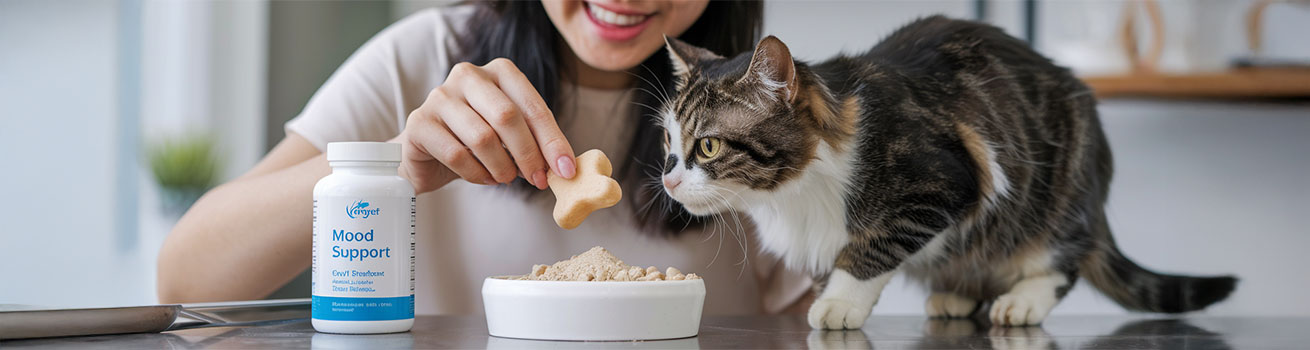
Caring for a cat with depression requires patience and appropriate care. With the right approach, many cats can recover from depressive episodes and regain their normal behaviour.
Here are some tips to help manage depression in cats:
1. Spend Quality Time
Dedicate more time to interacting with your cat. Simple acts like gentle petting, ear rubs, or brushing can help to provide comfort and reassurance. Engage in your cat's favourite activities while maintaining a calm, soothing environment to help rebuild its emotional well-being.
2. Provide Entertainment
Introduce new interactive toys or games to reignite your cat's interest in their surroundings. For instance, puzzle toys that dispense treats or fishing pole-type toys encourage both physical activity and mental stimulation. Consider setting up entertainment options, such as strategically hidden treats, to keep your cat engaged during your absence.
3. Offer New Food
A change in food flavours or textures may stimulate appetite in depressed cats. Special treats, such as small amounts of boiled chicken, can encourage feeding. However, always consult a vet before modifying your cat's diet with human food.
4. Consider Supplements or Pheromones
Natural supplements containing L-theanine and L-tryptophan may improve your cat's mood by supporting serotonin production. Feline pheromones or scents such as catnip or mint are also known to provide a calming effect to cats. Seek medical advice from your vet before using any supplements.
5. Introduce a New Companion
While some cats may benefit from the companionship of other cats, this approach requires careful consideration. Adding a new kitten to the household may not always improve your cat's condition, particularly if they are mourning the loss of a previous companion.
Supporting Your Cat Through Depression

Depression in cats is generally a temporary condition that responds well to timely intervention. If you notice subtle signs of a depressed cat, schedule a wellness examination to rule out underlying conditions.
While challenging, depression in cats can be managed. With proper veterinary guidance and dedicated effort, many cats can find renewed happiness and live more fulfilling lives.
Keep reading
Keep reading
Keep reading
Is your cat feeling blue lately? Like humans, cats can also experience mental stress that presents with behavioural changes in their daily routine. Looking out for tell-tale signs allows you to address potential depression and improve the well-being of your feline friend.
This article provides some useful information on feline depression and how to manage the condition.
How to Tell If My Cat is Depressed?
Cats cannot express their emotions verbally, but instead communicate distress through noticeable changes in their body language.
Common Signs of Depression in Felines:
- Reduced appetite or changes in eating patterns.
- Losing interest in interaction or favourite activities.
- Excessive sleeping or lethargy.
- Grooming changes leading to unkempt fur.
- Withdrawal from family members or other animal companions.
- Changes to litter box habits.
If your cat is not behaving like its normal self, consult a vet immediately, as some of these clinical signs may be associated with underlying health issues.
Do Cats Get Depressed?
Yes, even cats can experience depression. The condition usually improves with proper care and environmental adjustments. However, cats are masters at hiding physical illnesses, so a veterinary examination is essential to rule out potential medical issues.
Causes of Cat Depression
Various factors, from environmental triggers to health problems, can leave your cat depressed. Identifying the root causes is an important step in managing your cat's health.
Common Causes of Depression in Cats
- Grief: Most cat owners tend to believe that cats are independent creatures. However, cats are capable of forming strong bonds with family members or other pets. Losing a social companion can result in mourning.
- Environmental Changes: Moving houses can be stressful for cats, as the sudden change might restrict their usual activity patterns. For instance, relocating to an apartment might prevent an outdoor cat from accessing familiar outside spaces.
- Routine Disruptions: Changes to your working schedules, caretakers, or daily household patterns can upset a cat's routine.
- Physical Illness: Health problems such as arthritis or injuries can limit your cat's mobility and restrict normal activities. Underlying medical conditions are also often present with behavioural changes before physical symptoms become apparent.
Understanding the potential triggers for depression allows you to take preventive measures and improve the well-being of your cat.
Caring for a Depressed Cat
Caring for a cat with depression requires patience and appropriate care. With the right approach, many cats can recover from depressive episodes and regain their normal behaviour.
Here are some tips to help manage depression in cats:
1. Spend Quality Time
Dedicate more time to interacting with your cat. Simple acts like gentle petting, ear rubs, or brushing can help to provide comfort and reassurance. Engage in your cat's favourite activities while maintaining a calm, soothing environment to help rebuild its emotional well-being.
2. Provide Entertainment
Introduce new interactive toys or games to reignite your cat's interest in their surroundings. For instance, puzzle toys that dispense treats or fishing pole-type toys encourage both physical activity and mental stimulation. Consider setting up entertainment options, such as strategically hidden treats, to keep your cat engaged during your absence.
3. Offer New Food
A change in food flavours or textures may stimulate appetite in depressed cats. Special treats, such as small amounts of boiled chicken, can encourage feeding. However, always consult a vet before modifying your cat's diet with human food.
4. Consider Supplements or Pheromones
Natural supplements containing L-theanine and L-tryptophan may improve your cat's mood by supporting serotonin production. Feline pheromones or scents such as catnip or mint are also known to provide a calming effect to cats. Seek medical advice from your vet before using any supplements.
5. Introduce a New Companion
While some cats may benefit from the companionship of other cats, this approach requires careful consideration. Adding a new kitten to the household may not always improve your cat's condition, particularly if they are mourning the loss of a previous companion.
Supporting Your Cat Through Depression
Depression in cats is generally a temporary condition that responds well to timely intervention. If you notice subtle signs of a depressed cat, schedule a wellness examination to rule out underlying conditions.
While challenging, depression in cats can be managed. With proper veterinary guidance and dedicated effort, many cats can find renewed happiness and live more fulfilling lives.
Keep reading
Keep reading
Keep reading
Follow us on Instagram
Follow us on Instagram