For Vets:

Cat Asthma: Just a Cough, or Something More Serious?
Cat Asthma: Just a Cough, or Something More Serious?
Apr 25, 2025
Cat Asthma: Just a Cough, or Something More Serious?
Apr 25, 2025
Cat Asthma: Just a Cough, or Something More Serious?
Apr 25, 2025
Frequent coughing in cats is often attributed to hairballs or mild respiratory irritation. However, it may point to a more serious underlying condition such as feline asthma. This condition affects approximately 1–5% of the feline population, most commonly young to middle-aged cats.
Feline asthma is a chronic, inflammatory respiratory disease in the lower airways. Neglect may result in potentially life-threatening complications. Understanding the symptoms, causes, and available treatments can significantly improve outcomes for affected cats.
What is Feline Asthma?
Cat asthma, or feline allergic bronchitis, is a chronic, progressive condition marked by inflammation and narrowing of the lower airways. It is a type I hypersensitivity reaction, usually triggered by inhaled allergens such as pollen, mould, cigarette smoke, or household chemicals.
The immune response involves eosinophilic infiltration and smooth muscle contraction, causing wheezing, coughing, and difficulty breathing. If left unmanaged, chronic inflammation can lead to permanent structural changes in the lungs, known as airway remodelling.
Asthma in cats is most commonly diagnosed between the ages of two and eight years, with no clear sex predilection. Certain breeds such as Siamese cats and Oriental Shorthairs may be overrepresented, suggesting a potential genetic component.
Symptoms of Asthma in Cats

Recognising early signs is key to managing asthma effectively.
Common Clinical Signs:
- Persistent coughing, often mistaken for hairballs
- Audible wheezing or whistling noises
- Open-mouth or laboured breathing
- Exercise intolerance
- Cyanosis (bluish tinge to gums or tongue in severe cases)
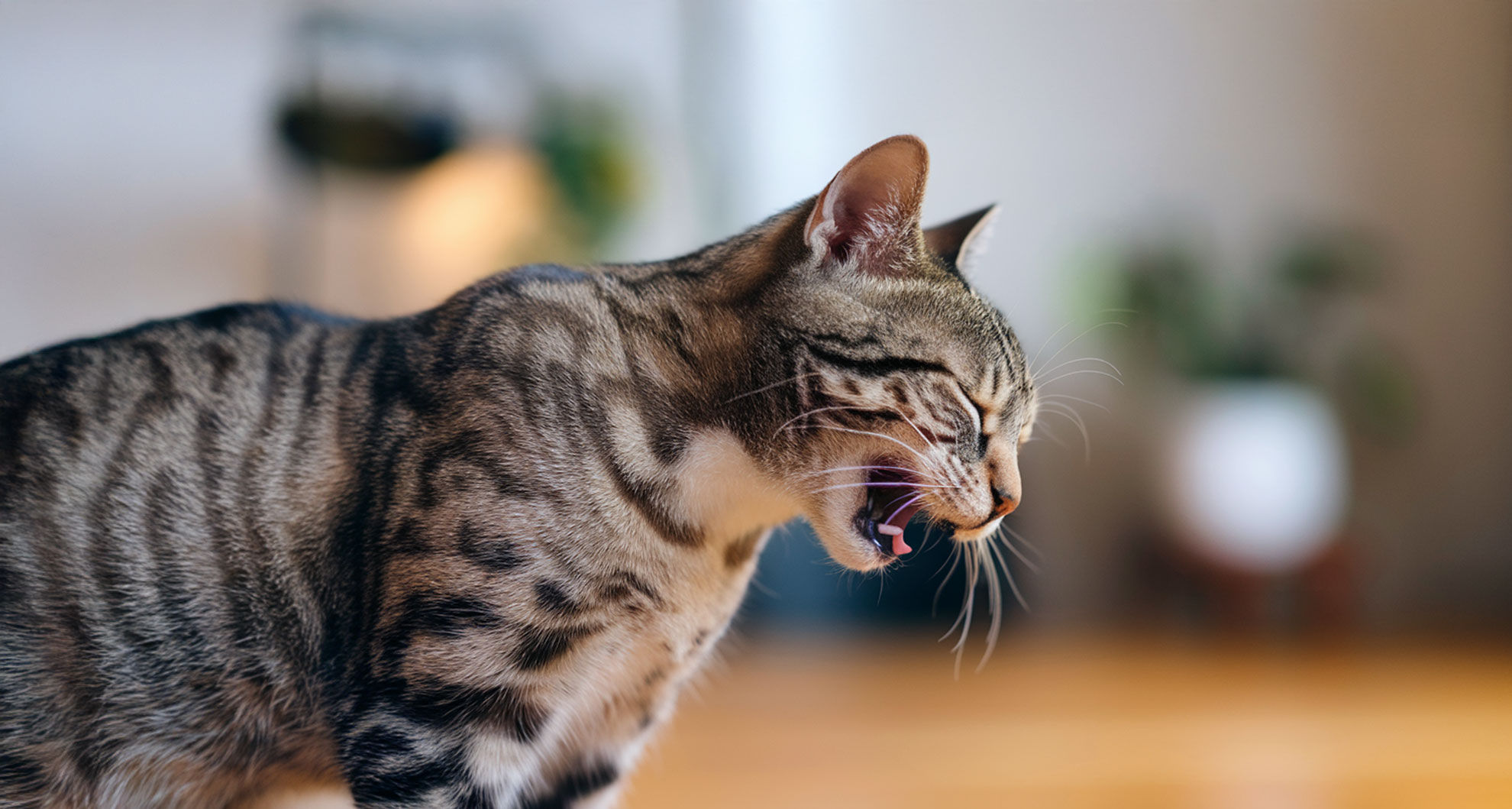
- Hunched posture with extended neck during coughing episodes
Episodes can range from mild to life-threatening, particularly if bronchoconstriction becomes severe. As some signs may be intermittent, owners may only recognise the condition after a sudden, severe asthma attack. Any cat showing signs of respiratory compromise must be assessed promptly by a veterinarian.
Diagnosing Feline Asthma
Feline asthma is a diagnosis of exclusion and often requires serial monitoring. Other differentials such as heart disease, neoplasia, or respiratory infections must be ruled out.
The process typically involves a combination of history-taking, physical examination, and diagnostic imaging:
- Thoracic radiographs – to identify bronchial thickening or a “donuts and tramlines” pattern.
- Haematology and serum biochemistry – to rule out parasitic or infectious differentials
- Faecal examination – to check for migrating larvae of parasites such as Aelurostrongylus abstrusus.
- Bronchoalveolar lavage (BAL) – considered the gold standard for identifying airway inflammation and the presence of eosinophils.
Treatment and Management

Cat asthma is manageable but not curable. Treatment is aimed at reducing inflammation, controlling bronchospasm, and minimising exposure to allergens:
- Corticosteroids: Oral (prednisolone) or inhaled (fluticasone) to reduce airway inflammation.
- Bronchodilators: Such as albuterol/salbutamol, used for acute bronchoconstriction. Often administered via metered-dose inhalers with spacer devices.
- Environmental Control: Avoidance of asthma triggers is crucial. This includes dust-free cat litter, avoiding aerosols and cigarette smoke, and using air purifiers.
- Weight Management: Obesity worsens respiratory function and should be addressed.
- Nutritional Support: Some evidence supports hypoallergenic or anti-inflammatory diets to complement medical therapy.
Although the condition cannot be cured, it can be successfully managed through a combination of medication and environmental control.
Long Term Outlook
With proper diagnosis and ongoing treatment, most asthmatic cats can lead relatively normal lives. Regular veterinary rechecks every 6–12 months are advisable to monitor response and adjust medication dosages.
Cat owners are also encouraged to maintain a respiratory diary, documenting symptoms, suspected triggers, and medication responses. This can aid the veterinarian in fine-tuning management strategies.
Preventing Asthma Attacks

Proactive management helps reduce the frequency and severity of attacks:
- Eliminate known allergens from the home
- Consider HEPA air filters
- Avoid strong-smelling products like perfumes, scented litter, or detergents
- Provide stress-free environments; feline pheromone diffusers may be helpful
- Administer medications consistently, even if symptoms appear controlled.
When to Seek Emergency Care
Immediate veterinary attention is required if your cat exhibits any of the following:
- Open-mouth breathing
- Cyanosis (blue gums or tongue)
- Collapse or unresponsiveness
- Prolonged or unrelieved coughing fits
Prompt intervention with oxygen therapy, nebulisation, and intravenous corticosteroids can be lifesaving during acute exacerbations.
Manage Your Cat's Asthma Effectively

Feline asthma requires lifelong attention but is manageable with the right combination of veterinary medicine and environmental control. Prompt recognition of symptoms and adherence to treatment plans are vital in ensuring a good quality of life for affected cats. If your cat displays any signs of respiratory distress, seek veterinary advice immediately.
Keep reading
Keep reading
Keep reading
Frequent coughing in cats is often attributed to hairballs or mild respiratory irritation. However, it may point to a more serious underlying condition such as feline asthma. This condition affects approximately 1–5% of the feline population, most commonly young to middle-aged cats.
Feline asthma is a chronic, inflammatory respiratory disease in the lower airways. Neglect may result in potentially life-threatening complications. Understanding the symptoms, causes, and available treatments can significantly improve outcomes for affected cats.
What is Feline Asthma?
Cat asthma, or feline allergic bronchitis, is a chronic, progressive condition marked by inflammation and narrowing of the lower airways. It is a type I hypersensitivity reaction, usually triggered by inhaled allergens such as pollen, mould, cigarette smoke, or household chemicals.
The immune response involves eosinophilic infiltration and smooth muscle contraction, causing wheezing, coughing, and difficulty breathing. If left unmanaged, chronic inflammation can lead to permanent structural changes in the lungs, known as airway remodelling.
Asthma in cats is most commonly diagnosed between the ages of two and eight years, with no clear sex predilection. Certain breeds such as Siamese cats and Oriental Shorthairs may be overrepresented, suggesting a potential genetic component.
Symptoms of Asthma in Cats
Recognising early signs is key to managing asthma effectively.
Common Clinical Signs:
- Persistent coughing, often mistaken for hairballs
- Audible wheezing or whistling noises
- Open-mouth or laboured breathing
- Exercise intolerance
- Cyanosis (bluish tinge to gums or tongue in severe cases)
- Hunched posture with extended neck during coughing episodes
Episodes can range from mild to life-threatening, particularly if bronchoconstriction becomes severe. As some signs may be intermittent, owners may only recognise the condition after a sudden, severe asthma attack. Any cat showing signs of respiratory compromise must be assessed promptly by a veterinarian.
Diagnosing Feline Asthma
Feline asthma is a diagnosis of exclusion and often requires serial monitoring. Other differentials such as heart disease, neoplasia, or respiratory infections must be ruled out.
The process typically involves a combination of history-taking, physical examination, and diagnostic imaging:
- Thoracic radiographs – to identify bronchial thickening or a “donuts and tramlines” pattern.
- Haematology and serum biochemistry – to rule out parasitic or infectious differentials
- Faecal examination – to check for migrating larvae of parasites such as Aelurostrongylus abstrusus.
- Bronchoalveolar lavage (BAL) – considered the gold standard for identifying airway inflammation and the presence of eosinophils.
Treatment and Management
Cat asthma is manageable but not curable. Treatment is aimed at reducing inflammation, controlling bronchospasm, and minimising exposure to allergens:
- Corticosteroids: Oral (prednisolone) or inhaled (fluticasone) to reduce airway inflammation.
- Bronchodilators: Such as albuterol/salbutamol, used for acute bronchoconstriction. Often administered via metered-dose inhalers with spacer devices.
- Environmental Control: Avoidance of asthma triggers is crucial. This includes dust-free cat litter, avoiding aerosols and cigarette smoke, and using air purifiers.
- Weight Management: Obesity worsens respiratory function and should be addressed.
- Nutritional Support: Some evidence supports hypoallergenic or anti-inflammatory diets to complement medical therapy.
Although the condition cannot be cured, it can be successfully managed through a combination of medication and environmental control.
Long Term Outlook
With proper diagnosis and ongoing treatment, most asthmatic cats can lead relatively normal lives. Regular veterinary rechecks every 6–12 months are advisable to monitor response and adjust medication dosages.
Cat owners are also encouraged to maintain a respiratory diary, documenting symptoms, suspected triggers, and medication responses. This can aid the veterinarian in fine-tuning management strategies.
Preventing Asthma Attacks
Proactive management helps reduce the frequency and severity of attacks:
- Eliminate known allergens from the home
- Consider HEPA air filters
- Avoid strong-smelling products like perfumes, scented litter, or detergents
- Provide stress-free environments; feline pheromone diffusers may be helpful
- Administer medications consistently, even if symptoms appear controlled.
When to Seek Emergency Care
Immediate veterinary attention is required if your cat exhibits any of the following:
- Open-mouth breathing
- Cyanosis (blue gums or tongue)
- Collapse or unresponsiveness
- Prolonged or unrelieved coughing fits
Prompt intervention with oxygen therapy, nebulisation, and intravenous corticosteroids can be lifesaving during acute exacerbations.
Manage Your Cat's Asthma Effectively
Feline asthma requires lifelong attention but is manageable with the right combination of veterinary medicine and environmental control. Prompt recognition of symptoms and adherence to treatment plans are vital in ensuring a good quality of life for affected cats. If your cat displays any signs of respiratory distress, seek veterinary advice immediately.
Keep reading
Keep reading
Keep reading
Follow us on Instagram
Follow us on Instagram